
Healing Play After the Eaton Fire
Making Space to Play After the Eaton Fire
The Eaton Fire was still burning when the phones at Kidspace began to ring. Children were showing signs of stress from a combination of evacuations, school closures, horrifying news coverage, and jarring phone alarms that tracked developments in the burn zones. Kids were struggling, and their parents were worried.
And it wasn’t just family members asking Kidspace for help; soon community partner organizations were calling with requests to shelter at the museum, to conduct classes on our campus, and to host group events where evacuated families could reunite. Eight school campuses were severely damaged or destroyed, and the Pasadena Unified School District (PUSD) was forced to close schools for two to three weeks, interrupting education for approximately 14,000 students. “Children need to return to their happy place,” they all said, in one way or another.
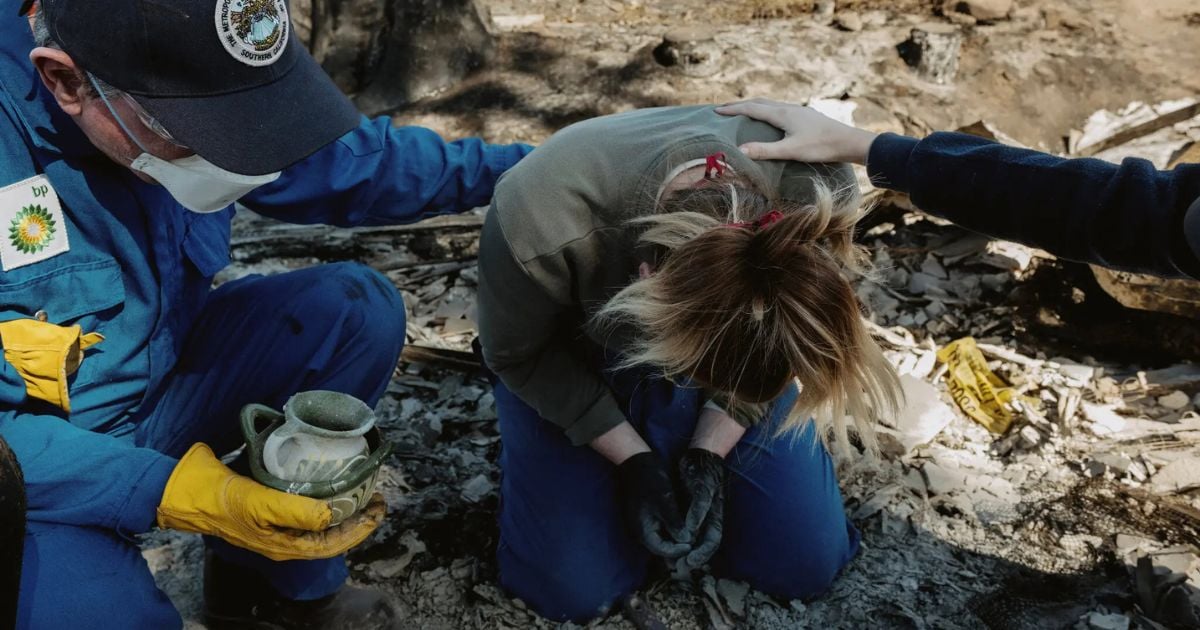
Play and Learning Manager Grace Colcord found a ring that was given to her by her grandmother. (Credit Mark Abramson for The New York Times)
What they didn’t know was that Kidspace staff needed their return just as badly. More than 85% of museum staff reported significant impact from the fires, ranging from long-term evacuations to irreplaceable personal loss. Play and Learning Manager Grace Colcord was reeling from losing her home and nearly all her belongings to the wildfire.
“The hardest part of loss and trauma is, it’s so lonely,” Grace said. “I needed to return to a space that felt normal, and where people care about me.” She also wanted to provide reassurance for children returning to the museum. “It was important for me to be able to create the sense of safety and stability that I was craving for myself, and for my neighbors,” she said. Grace knew that inviting children into a state of play could create an experience of being safe and cared for.
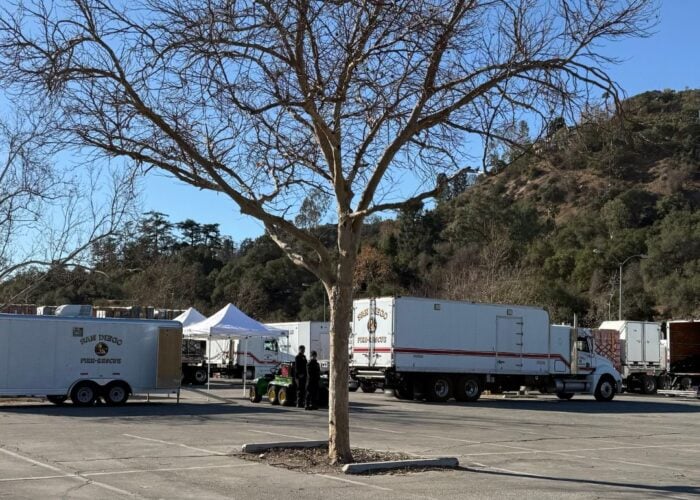
Emergency vehicles filled the parking lot outside the museum for many weeks.
After a thorough cleanup that included a complete re-mulching of the outdoor campus, the museum moved quickly to reopen, offering 4,500 tickets for free admission, free bottled water, child-sized masks, diapers, and new play programs to help children process their experiences. First responder and FEMA trucks were still blocking access to the museum’s parking area, so Kidspace worked with City partners to offer parking on the grass closest to the museum. No amount of inconvenience could deter families from coming, and before we could open the doors on January 16, a crowd had formed outside.
Once inside the museum, in a courtyard filled with building blocks and wagons, children immediately set to work processing their experiences through play. They spontaneously created structures they identified as homes, schools, and hospitals, destroyed and rebuilt some, and evacuated others to “someplace safe,” all while narrating the experience of the imaginary people inside the buildings. In the interior gallery, a “Goodnight Kidspace” oversized blanket fort prompted nurturing bedtime play for children who had been evacuated at night. Drum circles in the amphitheater created a sense of community as families gathered to create music together.
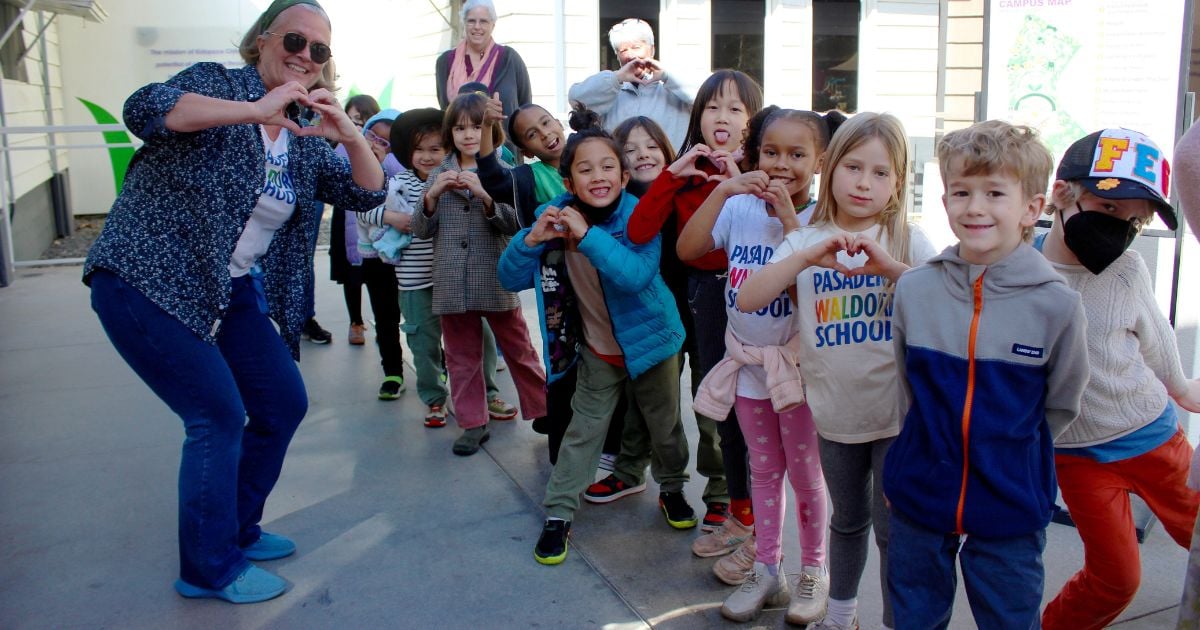
For schools displaced or destroyed by the fires, Kidspace became a free second home for classes, buddy meet-ups, and playdates to reunite displaced classmates for the entirety of the school year. Kidspace hosted more intensive ongoing programs with PUSD, the Waldorf School, and Sahag Mesrob, including supporting classroom teaching and play programs on campus with Kidspace staff.
Today, the immediate crisis of the Eaton fires may be behind us, but the recovery will continue for a long time to come. Nearly 23,000 residents were affected by the fires, with approximately 77% of their children under the age of 13. Low-income neighborhoods and children in foster care were the hardest hit, and research from the Pritzker Center indicates that children in the foster system are experiencing emotional and educational instability, a loss of supports, and emotional distress. Play can’t fix everything, but for children in crisis, it’s a proven tool for improving wellbeing.
It is in our mission to nurture the potential of all children. As we prepare for 2026 and beyond, Kidspace commits to being a space of recovery, reconnection, learning, and inspiration for all families, in the difficult times and in the joyful days ahead.
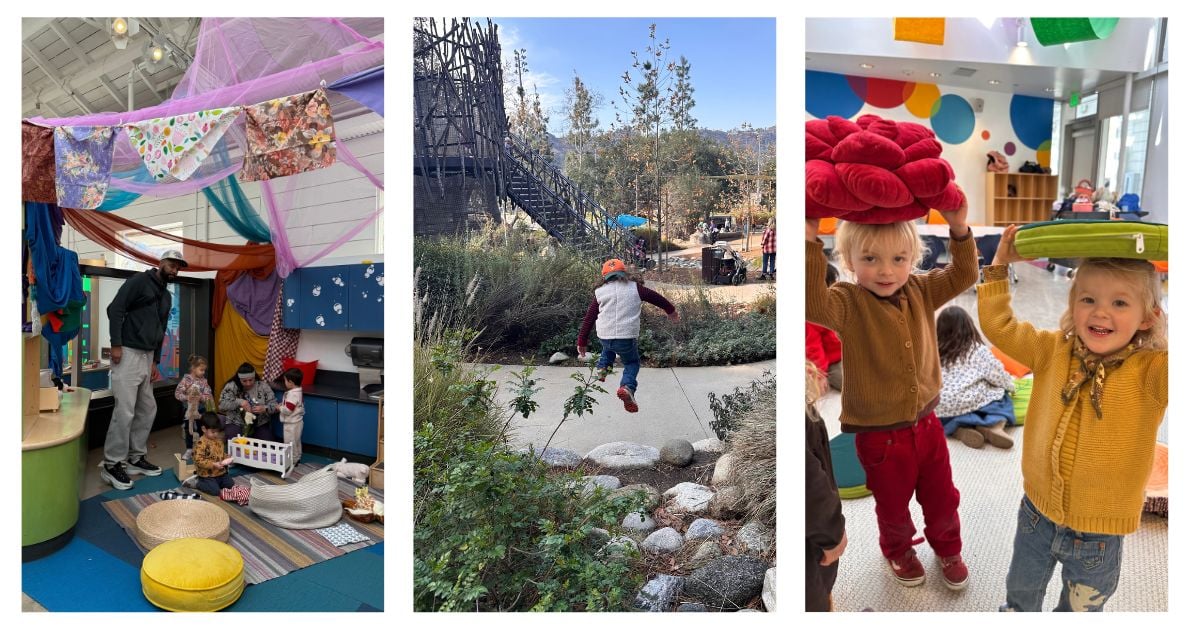
Healing play for children and families affected by fires.
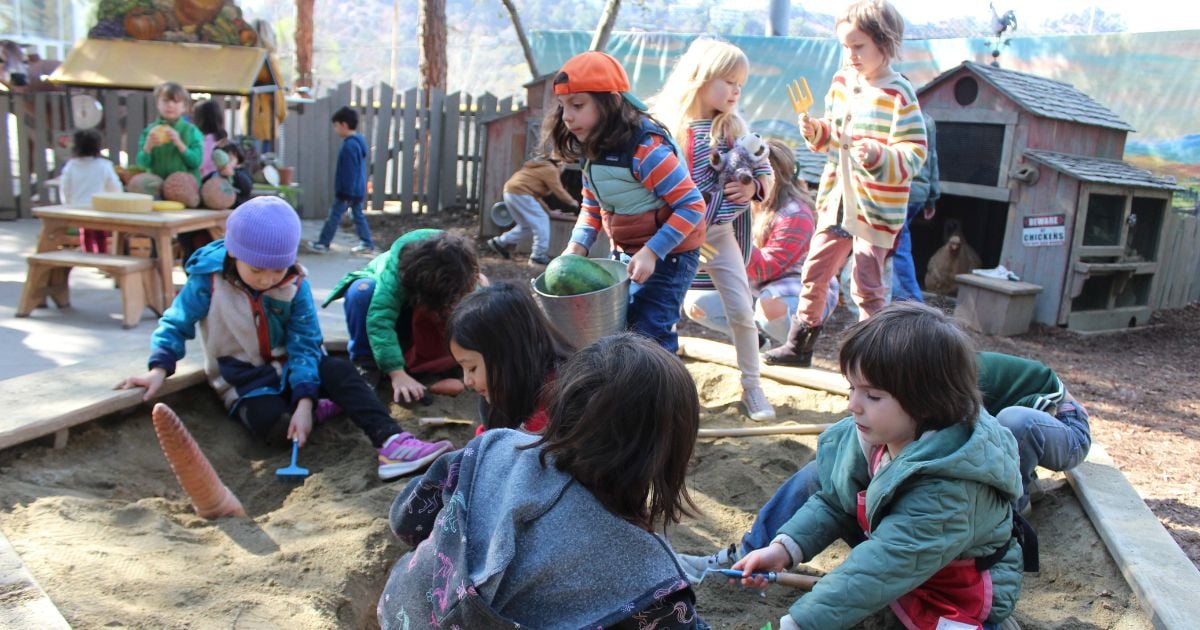
Schools affected by the fires had a place to meet, connect, learn, and play.